CEO Wisdom Podcast
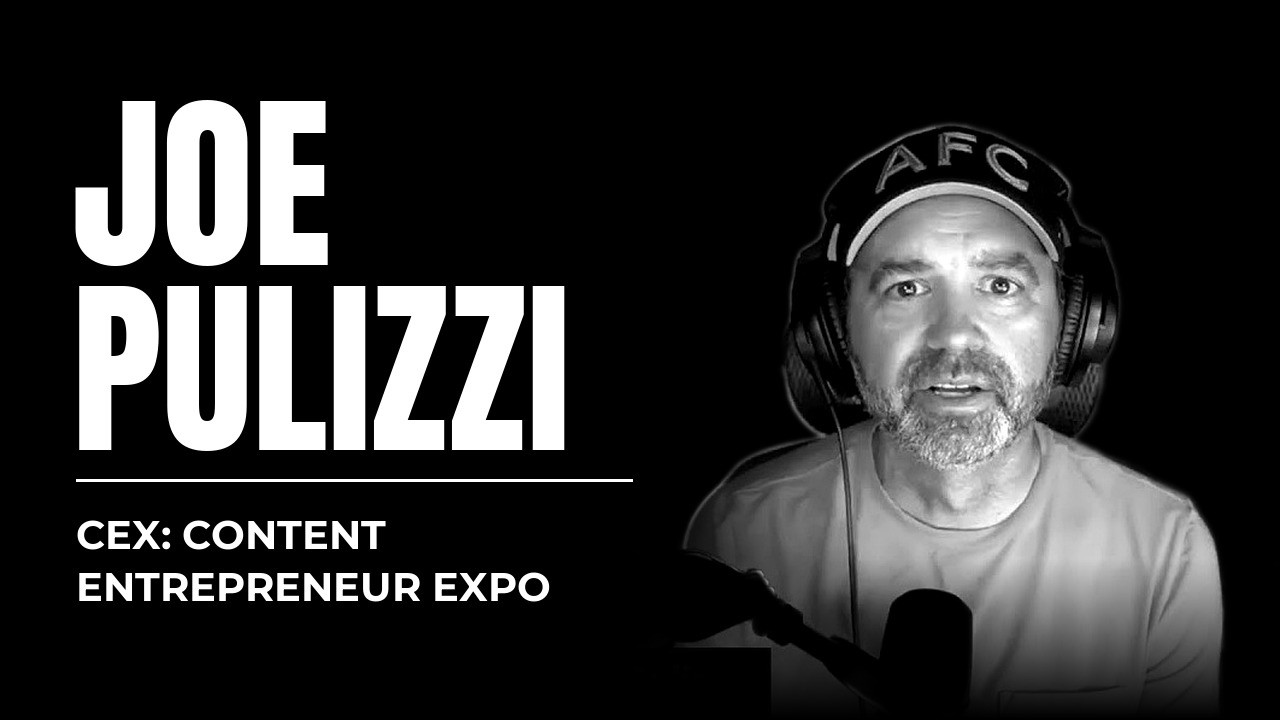
Joe Pulizzi: Content marketing strategies, audience building, business exits, and the Content Entrepreneur Expo
Summary
Joe Pulizzi discusses his journey from founding the Content Marketing Institute to his successful exit and the creation of The Tilt. He emphasizes the importance of building a direct connection with an audience through owned channels like email rather than relying solely on social media algorithms. Additionally, he shares insights on preparing for a business sale and using AI as a strategic assistant for content creation.
Key quotes
we focused on the individual content creator and how they can build a business by building an audience and then monetizing that audience over time
if if if you are if you're listening to that and you have an exit opportunity, it's something that you need to prepare many years in advance for, I think, to to make sure that you get what you want out of it.
I had a list going of people that I thought could buy the the company back, you know, six years before he sold it. And my goal over that time was to build relationships with those people
If we build trust by delivering consistently a valuable, compelling message over a long period of time, we build that trust. And if we can do that really well, people will buy from us
I still think the basics of building an audience remain regardless of AI. Um the first thing you got to remember about AI is es especially with content creation. I want it to help creators in the process
FAQ
What is the Orange Effect Foundation?
It is a foundation that raises funds for children and families who need speech therapy but cannot afford it, particularly those on the autism spectrum.
How did Joe prepare for the sale of his company years in advance?
He identified potential buyers six years before the sale and focused on building relationships with them so he could contact them directly when the time was right.
Why does Joe emphasize owning a content channel like an email list?
Owning a channel provides a direct connection to the audience, whereas social media platforms control the algorithms and the relationships with subscribers.
What was the primary revenue generator for the Content Marketing Institute?
Their in-person event, Content Marketing World, was the main money maker, eventually generating over $6 million in revenue from a single event in Cleveland.
Full transcript
Welcome to another founder wisdom podcast. We have Joe Pulitzi with us today. Joe is an author. He's uh the content entrepreneur is a founder. You can uh see his company at Tilt Publishing and CEX 2025 live from Cleveland, Ohio. I'm just glad to have the the man on uh to read a couple of his books. So Joe, welcome to the podcast. Tell us a bit more about yourself and what you're up to nowadays.
Yeah, uh Charles, thanks thanks for having me. Uh I'm probably best known in my work in content marketing. Started dabbling in that uh area in about 20201. Started content marketing institute uh um content marketing world all that stuff. And then we ended up having a really successful exit, my wife and I. And then uh in 2021 started the tilt which was instead of focusing on the marketing side of content creation, we focused on the individual content creator and how they can build a business by building an audience and then monetizing that audience over time.
Uh I write a lot of books. I got a new book coming out in August called Burn the Playbook which is for people who don't like their job or for recent graduates looking for their own path. So I'm excited about that one. And uh as you said, CEX, Content Entrepreneur Expo, is August in Cleveland. That's our event for content creators. And uh in my free time, um we have a foundation called Orange Effect.
And basically, we raise funds for kids and families who can't afford speech therapy but really need speech therapy. Most of the kids are on the autism spectrum and raise money for them. So, um yeah, but other than that, I'm just blessed, having a great time, and and looking forward to our conversation. Fascinating. Let's start with the exit. How life-changing was it for you?
At what stage were you when that happened? And how the heck did you work with your wife? Uh that's that's my other burning question. So, first of all, I am so blessed to have a partner um my wife who um does all the things really well that I'm terrible at. So, I'm more of a strategic thinker. I like to get on stage. I'm really I'm pretty good at sales and my wife is amazing at operations.
So when I decided to leave corporate America in 2007 and start what became Content Marketing Institute, it was mostly just me for the first year or two. And then I asked my wife not to go back to work. She was a social worker. She was staying home with the kids at the time and she was going to go back to work and I said, "You know, I really I I can't build this thing without you.
Can you help?" She stayed on and ran operations and it was great from that point. uh the company took off in 2010. It was always uh our goal, my specific goal to sell the company. I mean, I remember I was reading things that I wrote in my journal from 2008 that we would sell the company by 2015. We didn't in 15, we did in 16. Uh we sold it to a large event company.
We had an event called Content Marketing World that did pretty well. And uh we I stayed on for a year and a half with the company afterward. and it was absolutely life-changing. I was hoping to get a generational wealth type experience. Um, and we were able to do that. And my goal, honestly, Charles, was never to go back and do a business, like create another business again.
I'd already started a couple businesses and I'm like, okay, I don't need to do that again. And then I was just writing. I was actually writing fiction at the time. And then COVID came along and I sort of changed trajectories and and started the same model again. How can you build an audience through regular content creation and then monetize from there and ended up doing that with a newsletter called the tilt which is many things now.
We could talk about that if you want but no I absolutely um a lot of a lot of my CEO friends and founder friends they want to stay in the business. they don't want to exit in any way and I absolutely wanted to and we structured and made decisions all along the way to make sure that uh we would sell it for the goals that you know that we set into place for that.
So um if if if you are if you're listening to that and you have an exit opportunity, it's something that you need to prepare many years in advance for, I think, to to make sure that you get what you want out of it. I had a list going of people that I thought could buy the the company back, you know, six years before he sold it. And my goal over that time was to build relationships with those people.
So when the time was right and I could send the email out and said, "Hey, we're considering selling the company. Are you interested in reading the memo?" I had that relationship and we didn't have to go and and find those other places. Right. I never had an exit, but I had various points throughout my decade long uh entrepreneurial career in which I I was like, "Yeah, I'm set." You know, like uh I guess the first point was uh going from $10 an hour to 200 bucks an hour doing drop shipping about uh 10 years ago.
Then uh growing these large agencies and uh growing these skills most importantly that was like, "Yeah, I'm set. I never need really to work again, especially if I love what I'm doing, right?" And I I had various phases in my life in which I was like, "Yeah, I'm Seth." For you, um, was it like a night and day difference like uh yeah, having like a generational wealth?
Was it a a game changer? Did your personality or or mind or values change in that process or was it uh more of the same? Well, I hope my values didn't change. Um, I hope I'm still trying to serve others as as well as I can. Um I we were doing really well. So if you take you back so we in 2008 started the company in 2007 2008 2009 really struggling major in debt maxed out all the credit cards uh was considering going back and finding a job because we couldn't get the finances to work and then basically pivoted into what became Content Marketing Institute.
And so 2010, you know, maybe we were a couple hundred,000 company. By 2011, we were a million-doll company. And by 2015, we're a $10 million company. Um, that was a lot of work that went into that. You look at it from the outside, you're like, "Wow, that happened really fast." And it did. Uh, but we were making some some very good revenue and profit in 12, 13, and 14 leading up at that to that.
So, I felt really good about it, but I still was like, you know, do I have this opportunity for this really incredible exit? And so, when we had that, we absolutely jumped at it. Um, it gave me an opportunity to really focus on what I thought was more important, and that was spending more time with my kids, spending more time with my family. And in 2017, I think the decision that I made that maybe a lot of people don't.
I said like everybody was asking, "What are you going to do next, Joe?" Like, "What's your next business?" It's always and it was I felt like there was a lot of pressure on me, Charles, that I had to make this decision. I'm like, "What do I do?" And then I just decided at the end of 2017, I read a lot about taking sabaticals. I'm like, "Is this something that I could absolutely do?" And so made the decision in October and I and to starting in January 1st that I would take the entire year off like I wouldn't do any business.
The first 30 days in January I did electronics free. So I was on no and I was pretty I was a big social media person. I was heavy on Twitter and LinkedIn at the time. I basically stopped that cold turkey. I stopped checking email uh for 30 days and it was like a cleanse and it I got twitchy for a while. It was very difficult. But then in February, I took my father to Sicily to see his family.
And that was a life-changing experience. Wow. And I spent a lot more time with my family after that. And that's actually when I made the pivot into writing fiction because I wasn't just twiddling my thumbs, doing nothing, staring. I was actually, you was writing notes down, things that interested me. I was getting a lot of different experiences doing things.
And then I started to say, "Hey, I think I want to be a fiction writer." And that's where I started writing my my first novel. So yeah, it's just it's it's just interesting now that uh you know looking back on it where I think if I would I'm so glad in 2008 Charles that I set the goal to have that exit and I always still around that goal to have that exit.
I always say you know what do I stand for? What's most important to me? What are my spiritual goals? What are my mental goals? What are my physical goals? Those things didn't change. The only thing that changed was I knew that my kids and my family would be taken care of forever. So, we were blessed with that. But that gave me the opportunity to put more into our foundation and to more into our time with family.
And the 10 million a year, what was the 8020 the 20% that caused the the 80% of that? like I we I just want to know the the cold hard hacks, you know, because I know that a lot of energy and time and money went into making that happen. But what was the the bigger part of it with the lowest time investment? Sure. The So when we when we started, we were dabbling in every revenue channel you could possibly think of.
I was doing a lot of speaking. I was selling a lot of books. We were doing training. We were doing consulting. Uh we were doing webinars. We were selling our email list. Like we were doing all the things that a media company would do, but the big money maker and money generator for us was our event, our in-person event content marketing world. We decided to do that in September 2010 because there were there were there was no real like number one physical event in the content marketing industry.
And I'm like, could we actually be the event, the number one international event, and also could we do it in Cleveland, Ohio, which was a big question mark as well. And so we reserved a space at the Renaissance Hotel uh for September 2011. I was hoping that could, you know, could we get a hundred or 150 people to show up? We ended up getting 660 people that year, 1,000 the next year, 1,700 the next year, and ultimately 4,000 people in person to come to Cleveland, Ohio for this event.
And that event was about a six got up about six to 6.5 million in revenue for just that one event. And what's interesting over that time for those people that are interested in doing events, we were actually the plan was we were going to take it to London. We were going to take it to SI we had a an event called Content Marketing World Sydney. We did that two years there.
And then what I realized in kind of separating all that, we were doing a lot more work but not any more revenue or any more profit. And I said, "Well, maybe if we just marketed better in those places to get it's it's much more profitable for us to attract 50 people from Australia to come to Cleveland, Ohio for then to us to do a 300 person event in Sydney." So that's what we were like, "Okay, let's just get better at our marketing, drive them all to the one location." And events scale really, really well.
So that event ended up very, very profitable for us in doing that one big event. And that was sort of our secret sauce. Isn't it hella stressful though? And don't you need to invest tons of time? Like to me events equal to nightmare? Uh well, I guess it depends on if you have the right people. I mean, we had um we have an in our model was very interesting um from an employment standpoint because there were only two employees in our company, my wife and myself, and we had 28 contractors that work different parts of the businesses.
And then when we did an event, we hired an event, a wonderful event planner, uh, Kelly Wetszel, and she put together an entire team that basically what an event what they do is they they work events all the time. They'll work one event in Chicago, then they'll go to Cleveland, they'll go to DC, then they'll go to London, and we brought all those people in.
So we would have another 20 or 30 or 40 people come in just for our event to help support it. And that was a our saving grace because we didn't have the overhead of all those people. We had professionals that knew right away what they had to do. And this was starting in 2011. So as we scaled, we didn't have to create a larger organization to do a larger event.
We just had to bring in a few more contractors. So that was our saving grace. And the hardest part about doing an event is getting butts and seats. That is the number one thing. Executing an event. Yes. Is it challenging? Sure. Is it more challenging than anything else? No. Like a lot of people can run a really good event, but what a lot of people can't do is get people to pay $1,500 and and plus spend another $1,000 or $1,500 to go to the venue.
So, they're already out three $4,000 when they get there. They've made a really big investment. And then you put on a show and it's all, even though it's education, you know, B2B or B TOC, it's all entertainment. So you got to make sure that whatever you do, it's very very entertaining. And that's why we did spend a little bit extra to get a Kevin Smith or a Joseph Gordon Levit or a a bigger Mark Hamill one year uh came and was our closing keynote.
So we made sure we had a lot of fun as we in the process. But no, it was our outsourcing I think that did it. Fascinating. Yeah. Then I guess you have a moat because most people won't want to create such a complex event and get into this, right? Like they will want to create a webinar, but they won't want to get butts into seat. It's it's a very tough niche, I would guess, and you've developed an expertise into that.
You hired a Kelly, probably paid Kelly good money, right? Because it's like a a magnet to stress. She's handling the full team and uh yeah, she she must have the the nerves to to handle all of that. um content content how did content change since the age of AI and aren't we hitting diminishing returns right now or is it just about using AI in a genius way?
Well, we could talk about AI forever, which I'm I'm sure we will for for a little bit. I would love that. Yeah, we I'm happy to do it. Um I still think the basics of building an audience remain regardless of AI. Um the first thing you got to remember about AI is es especially with content creation. I want it to help creators in the process. You can use it for ideiation.
You can use it to help with your strategy. You could use it as an assistant. Lots of things you can use AI for. The output of content creation might not be on your top five. I know that we're seeing a lot of AI slop out there. If you're on Tik Tok or Instagram or any other channel, you see so much AI content, but if you're looking at it as a business model, really what you want to focus, do you want to leverage those social channels?
Sure. Do you want to leverage AI to be smarter about things? Absolutely. But what you want is at least one channel you can control. That's why email substack channels are still critically people are building out communities. These are really important because you have a direct connection with your fan base. That is critical because you don't have that on YouTube.
You don't have it on meta. They control the algorithms. They control the relationships with the subscribers. You don't have that as a content creator. So, we want to make sure from that standpoint, the business model, we still have something that we own and we can market on rented land on those channels, but we want to ultimately drive them back to something where we have a direct connection.
And that's why I'm still a big believer in email. Where it's going to go, anybody that tells you that they know where it's going to go in the three years is full of it. I don't know where it's going to go. I still want to believe that our goal as content creators is to build a real connection to build trust. If we build trust by delivering consistently a valuable, compelling message over a long period of time, we build that trust.
And if we can do that really well, people will buy from us. whatever we have to sell that is I mean that's media 101 and it's been that way for hundreds of years. Does AI this new technology change that? Maybe. Um but I still think there's room for the human in this. I still think that like you and I are having this conversation. Can somebody replace this conversation with AI?
Maybe someday. Maybe sooner than I think. But if I do my job as a content creator and I can build an authentic connection with people over time, there can be all that AI content out there and I can still have a business model here as a human being. So that's my hope. Yeah. And I think people will appreciate the human factor, the emotions, the hesitations, the weirdness, right?
The unpolished uh type of humans, right? Which I which is why I think like corporate schmucks will sort of go away, you know, like because corporate schmucks sound like AI nowadays. They're super polished. They say everything that's politically correct. I think that um will be a moat. But uh you're pointing out to this podcast for example, right? I cannot say it's been a a success story from a content perspective.
That was never my aim. Although it is dependent on the quality of guests that I will attract to this podcast because their their time is money, right? And they want to uh get the views, they want to get potential clients from this. So, I mean, an easy way would be for me to sponsor these podcasts to get more views, but a part of me cannot uh help but think that all the most popular podcasts nowadays are sensationalists type of podcasts, right?
And I'm in the B2B space. I'm going for truth. I'm going for scalability. And there's been some podcasts that have been successful in that niche. Take Lex Freedman for example. So, he's not necessarily interviewing CEOs or founders. he's interviewing researchers or professors. So, how should I approach that? Like I first I don't necessarily seek the limelight as a person.
I think that's uh quite destructive and and toxic over the the long term. And I'm not a sensationalist type of guy. I go for truth, right? I don't go for controversy. I go for contrarian. But if I'm right, you know, and if I can make money out of this. So any diagnostic or advice for this podcast as a content engine? Well, first of all, I think that where mo the the two reasons why most creators fail.
It's is because one is not consistently delivered and the second one is they don't have what I call a content tilt that's working. So let's just say that you're doing all because you you're doing a lot of podcasts, you're very consistent. Let's just say that you have the consistency part down. You're delivering on those expectations. Let's look at the tilt.
A tilt is that area of differentiation where you can break through the content clutter out there and actually build an audience. Most content creators, they don't have that where you'd say, "Hey, if you do all the work, if you're consistent, um you you have a differentiation enough where you're going to build that audience." That's where I would and I don't know if you have one or like if you really have one or not that's working but can you say hey if we do this we can be one of the top voices in our industry.
A lot of content creators don't go niche enough. They really are they're trying to go too wide. Like for example in my area of content marketing if I just said hey I'm going to do a podcast on content marketing be like good luck content a podcast on content marketing to marketers. Let's see what's my competition. thousands of people, maybe more than that.
How do I get that to a point where I can go down and say, well, if I really do this, I can be a leading voice. I can be one of the leading experts in this thing. Maybe it's content marketing to higher educations in the Pacific Northwest. Maybe it's uh uh content marketing without using AI, you know, some topic that's different that separates you apart.
with me when I, you know, like we're talking about content marketing like it's a real thing. When I started in 2007 and I started my blog, I started a content marketing blog. There were no content marketing blogs at the time. Nobody was talking about this idea of content marketing. Nobody was using that term content marketing. It took me three years to actually figure out, oh, hey, this is a term.
It's actually taking off. It's worked. I don't think a lot of people uh when they start, they really figure out how do I set myself apart enough? So that's where if I'm you, I'm continually spending my time to say, "Well, how do I do this so that I can break through all this other clutter?" And you could do it, you don't have to do it by niche, you could do it, as you said, it could be your personality.
It could be the way that you deliver it. It could be the the guest that you have. It could be your sense of humor. You could be a lot of different things. But I think that's where I mean, look at uh John Lee Dumis is a really good example. He starts a podcast called Entrepreneurs on Fire. How many podcasts at the time were on for entrepreneurs? A lot.
Well, no, no, there were there were actually there were actually a lot. There were there was nobody doing it on a daily basis. So, that's where John separated and say, "Hey, I think entrepreneurs need a daily reminder of the things they're struggling with." He goes to daily and he takes off. So, that's kind of where the example is where you can differentiate a lot of different ways.
So, what's the one thing that you could say in an elevator? Wow, that's the thing that's different. That's the thing that's going to set you apart. You work on that. You put in the work to 18 to 24 months. It should work. It should work. Yeah. I have the consistency, the niche, uh, still up to work. Like, yeah, I'll also use podcast as lead magnets, right, to generate me founders and CEOs as clients.
They're also my favorite people on the globe. I would say there's certainly an AI angle to um, my podcast. And yeah, you talked about GLD actually reminds me a lot of uh of John, like same era, same uh uh field of success. I would say like you maybe had a more life-changing exit. I know that John was seeking an exit uh for on the EO fire side of things.
I'm not sure if he had it. I'd have to have him on the pod again. Um but tell me about the recycling part of that content. Um and specifically using AIS, right? because I use Opus to chop up these uh podcasts. I I stopped doing that because yeah, I wouldn't see like much result even if we would get like multiple thousands of views, right? Like I would not get that that much leads from it.
I'm quite focused on the ROI in the equation. Tell me how you use um AI as in a content context. So Opus, for example, chopping these into shorts, recycling these into posts, right? Do you have a framework when it comes to this? So, no, I mean, I'm I'm a learner. Like, I'm just trying to figure out how can I learn AI that makes the most sense for me so I can talk to my community.
I've got a content entrepreneur community that's they're all trying to figure this thing out. So, like just from a technical standpoint, you know, I've got a a weekly podcast called Content Inc. I've been I just did five my 500th episode. We've been doing it forever. So, I've changed and not produced that by hand like I used to. I throw it into Descript now.
So, descript is great. I can edit through, you know, the video through text the output in audio and in video. It's great. It works really well. Um, so we'll go ahead and do that. I mean, we use like you're using StreamYard for uh for this podcast. We use StreamYard for my other podcast, This Old Marketing. Um, but from an AI like a how do I use like chat GPT um or anthropics tool or whatever the case is, I like to use it mostly for ideiation or what am I missing?
So, I'll give you a really good example. So, I just finished my um the draft of my my new book coming out, Burn the Playbook, and I put it into chat GPT and I said, "Okay, you are a worldclass editor. you are a world you you understand the the world of content creation and business better than anyone else. What am I missing? Like in this book, what's missing?
And it'll go through and it'll say, well, here's the things you hit on well, and here's the things you didn't hit on. That's of real value to me. It's not saying here's this here's this chapter, here's this blog post, here's this podcast. It's saying here's my thinking based on how you prompted that. And that that's where I think the value is for a lot of content creator is where I think that we should go instead of where I think most of the attention goes to.
I mean, you're seeing it on LinkedIn now. I saw it three times today. There were three people that I know that are using the same darn format for their LinkedIn post that looks exact and reads exactly the same. I can guarantee you they're using chat GPT for that. I I just I guess I'm like, come on, we can be better than that. So again, I'm going to try as to talk to as many people out there as possible and say yes, use it as an amazing assistant, writing assistant, editorial assistant, deep thinker, strategic thinker.
The deep learning stuff on all these platforms is incredible if you're trying to do research, but then take that and make human moves and do human things and make your decisions from there. So you don't use it yet to write the newsletter and the books. And also tell me how successful each channel has been for you, the newsletter and the book specifically.
So the new um so I' I've almost got different areas of my life. I started the content marketing newsletter and started it as a content marketing blog. That newsletter got up to 250,000 subscribers. I don't own that anymore. We sold that. And I started fresh with my own Joe Pulitzy newsletter that has 10,000 subscribers um for the email version. And then we've got another 40,000 people that subscribe to it on LinkedIn.
I absolutely use it for idea creation. I do all the time. I'll go in, I'll say, "Here's what I'm thinking of. Here's the things that are challenging with me today." And I've got a back and forth communication on here's what I think that here's some things that you could have you thought about this today. Have you thought about this? And I'm like, "Oh, yeah." And then I'll go ahead and start writing from there.
I will absolutely use it to help proofread and edit some of my stuff and say, "Hey, in because I've got a whole um section notes section in in chat GT GBT setup with all my writing. I took all my podcasts, all my writing, all my newsletter posts, and I put it all in together because I wanted to get a feel for how I write. I don't want it to write for me, but I wanted to know my voice." So when it goes and it says you should edit this way or look at this content or I love it when it'll say you know Joe have you thought about this you covered in this podcast back in you know 2009.
I'm like oh yeah we could revisit that. I could revisit my exit. Those are the types of things and that's how I I seem to be using it more and I love that. I loved having having to put in my entire draft and say please help me. I don't want to miss anything. Who am I missing? What experts? What books? those types of things. And then of course, please go out and make sure it's correct.
Like don't trust it, you know, trust but verify, I guess. Make sure that you're not taking because absolutely AI will make things up. It's not uh it's for sure not flawless. So you So it's great. It gives you some ideas, but you always have to check, right? As a multi- potential light, what does a day in your life look like nowadays? Uh, I will get up uh and I like I don't meditate.
I would never call it meditation, but I'll grab my coffee and I'll sit and I'll just think and I'll I'll just be without the emails and without the notifications for a while and then I generally will read um I'll either read a fiction novel or I'll read I'm at a book club with a bunch of guys. We were in a non-fiction book club so I'll read my latest non-fiction book.
Uh, and then basically I will go and start writing something. Um, whether that's for my newsletter or whether that's for my next book. I like to get 500 or a thousand words written. Uh, and then you know I'm on podcasts like these. I've got two podcasts of my own. So those but I probably like work work. If you're saying how much does Joe work per week?
I'm probably working like 20 hours a week because a lot of the time is spent for Orange Effect Foundation. We're spending that. We do we spend a lot of time with family right now. My wife and I both have family members who are much older who are struggling with their health. So, we're dealing with a lot of those issues as well. Um, so that's kind of how I'm spending my time.
And and we're in Cleveland, Ohio. And right now is the reason why you live in Cleveland, Ohio because the weather's so nice. So at night I'm outside somewhere. Um, and then I'm I run four times a week. I golf once or twice a week. Uh, I work out um 10 20 minutes a day. Uh, I I'm into timebased eating these days, so I only eat between the hours of 12 and 7 o'clock.
Um, so that's kind of it's kind of where I'm at right now. What uh non-fiction book are you reading right now that you would recommend to your audience? Uh, so the non-fiction book that I'm reading right now is called My F in Life by Getty Lee. And if you are familiar with the band called Rush. Yes. Familiar with the band called Rush. So Getty Lee's bass player, lead singer.
And so we're all reading that. And uh one of the people in our book club is a huge Rush fan. So he recommended that. My um mine from two months ago was the the rise and fall of Pete Rose, the baseball player. Um so we're you know those types I and I I highly recommend those right now. Um, from a like a businessy standpoint, I got a lot of value out of Sahil uh Bloom's The Five Types of Wealth.
I thought that was a really good book and and super interesting. Um, I I recently read Think and Grow Rich again, which is a book from 1937 and Napoleon Hill, but I generally read that book every couple years. Uh, and then my friend uh just set sent me um Napoleon Hill's other book, Outwitting the Devil. It's right here in front of me. I'm going to be uh reading that one in a little bit as well.
So yeah, um Stranger in a Strange Land is a fiction book. I read that book every couple years. I love reading thriller novel. I love reading Stephen King's latest books are fantastic. So uh I I would say any business person, any founder, like don't just read uh non-fiction. Abs if you can read at least one fiction, uh it really gets your brain thinking in different ways.
It's kind of a refreshing change. you'll you'll be surprised how many business ideas you have while you're reading a fiction novel. So, that would be my recommendation. I'm using Chad GPT nowadays uh to give me nice uh non-fiction and fiction books, right? Like um for example, the last 24 hours of Anthony Borden, right? Like it's a Yeah, that hasn't been documented, but there's enough information out there to just piece it together into a nice story.
Um and also like total fictional stories, right? like a bladeunner 2049 style, you just give it that prompt or Lord of the Rings style and it comes up with a very nice story. What do you think of um books as a medium? Like I'm not reading any books nowadays because Chad GPT is so good is like micro stories keeps my attention. The learning is much more stronger via a book that is like an ultramarathon.
You you lose track like uh a hundred times in the book, right? And usually it's like a business card for the author rather than a a learning mechanism. What are your thoughts on this? Well, I'm I'm a huge believer in books. I mean, we've got a I've got a publishing division. Uh so so we um I believe that anyone that has like a mission statement that they live by, like here's my belief in business or here's my belief in marketing, whatever, the best business card you can have, to your point, is a book.
Now, you don't want that to be a salesy book. you wanted to be a prescriptive book, if you will. Uh, in my circle of, you know, I'm 52. In my circle of friends and colleagues, I'm seeing more books read or listened to than I have in a long time. So, I think from that standpoint, because books aren't it doesn't have to be a hundred,000word tome. It it could be a you know, the the book that I'm writing for August is 35,000 words.
It's a shorter book. It's to the point. I've written it on I've I've written it purposely in a way that's almost like Tik Tok. There's short stories all the way throughout a chapter that kind of binds it all together. Um audiobooks I you know when I go running I listen to an audio book. Um so I haven't used Chat GPT in the way that you're talking about like tell me a story type of thing.
I really do. Like Ann Hanley's book on, you know, he's coming out with a new book on writing. I'm absolutely going to read that. Robert Rose is writing a new one on like a different way of thinking about, you know, friction in your life and and those types of things. So, I'm absolutely going to read that. Um, so yeah, I I've got I think because of the way that I can somebody can read it in digital, they can read it in print, which I still believe in.
You can listen to the audio book. I think that there's a lot of opportunities for that and I'm pretty bullish on I mean there's been more books were sold last year. I think we sold set a record. So it's like all the mediums are growing uh including books and I think that's just uh there's still an opportunity there even with like the way you're using it.
Tell me about the orange effect like first the color. Why is it your favorite color and second the uh the actual foundation? Thank you. Yeah. Um I left an executive position in publishing in 2007. And I always had the idea in my head that the the color of the company that I would start would be orange and gray. Primary color orange. And so I'm like, okay, well, what does a CEO do?
What does a founder do? And I said, well, it a founder dresses in the colors of the company. So I bought a lot, you know, I bought orange shirts. And so when I went to a speaking engagement or when I did an interview, I always wore an orange. It's like it was nothing real strategic about it. I just like it just makes sense. Okay. Okay. I got my orange shirt on.
I mean, I was a big believer like Steve Jobs, you kind of shorten your decision making. You don't have, you know, you wear the same thing every day. That's So I'm like, great, I'm gonna wear the orange. And then there was one event that I did in Brussels, Belgium, and the organizer, I was doing a keynote there, and the organizer said, "Would you wear a black tuxedo and not wear your whatever you were going to wear?" And I said, "I'll wear whatever you want.
You're paying me to be here, I'll wear a black tuxedo." Wore the black tuxedo, went up on stage, came off stage, and I had three pe I'd never been to Brussels in my life. I had three people that came up to me and asked me why I was not wearing orange. And I'm like, "This is incredible. I've never been here. You must have just saw a presentation I did online or my picture in orange or whatever." And I had branded myself with that color.
And when I after that day, I went down the rabbit hole in orange. Orange suit, orange everything, double the orange and all the logos. Way before HubSpot did anything around orange, we were doing orange. And I felt that it was a business advantage because people started to recognize me when I had orange on. And so all you can see all the companies that that I've developed or helped develop or be a part of or have orange in it.
Thus back into in 2007 at the same time we were starting a foundation uh and called it orange effect foundation because of this love of orange but also this differentiation but also is sort of the the color of communication. Um and that's what orange effect foundation is all about. We we have our oldest is on the autism spectrum and needed aggressive speech and play therapy that insurance didn't cover at the time.
So we went through the whole process. We couldn't understand why we needed these services but at the same time they weren't u being covered by insurance and a lot of organizations would wouldn't help certain people in certain situations if they didn't have the money to do it and I thought that was a travesty. So Orange Effect Foundation became sort of the funer of last resort for a lot of the children that have our grants.
So, we've got over 450 children in 39 states that are on our grants and we're paying for their speech therapy or speech technology equipment that if we weren't there, they might not be able to get that therapy or that speech communication device. So, that's kind of where my heart's in that place. And so, because of our love for Orange and our belief in communication as being the difference, we named it Orange Effect Foundation.
Love it. Joe, thanks so much for being on today. Where can people find out more about you? Oh, thank you. Yeah, thanks for the opportunity. Joe palitzy.com is where you puli is where you'll find all my stuff, my books. I got two podcasts, Content Inc. and This Old Marketing, new books coming out in a little bit. Uh, if you want to see me in person, you can see me at Content Entrepreneur Expo, uh, CEX.Eventevents.
That's in late August in Cleveland, Ohio. And uh if you want to just send me a note, joeitzy.com, there's a little comment thing. Send me a note. I'd love to hear from you.